One person is the documentation.
The whole thing runs on a set of sheets only one person truly understands. When they're on vacation, so is the business.
Off-the-shelf software covers most of what you do. The last stretch, the way your quoting really works, the approval no product has, the handoff between two systems, is where the hours and the risk pile up. We build the custom software for that last stretch, and we build it so your team uses it instead of routing around it.
The whole thing runs on a set of sheets only one person truly understands. When they're on vacation, so is the business.
The tabs feed each other with formulas nobody remembers writing. One deleted row and the numbers are quietly wrong for a week.
Everyone can edit everything, nothing's logged, and when a figure changes there's no way to know who, when, or why.
Off-the-shelf handles most of it, then stops exactly where your business is different, and that gap becomes a spreadsheet.
Two tools that won't integrate, so a person is the bridge, moving data across by hand and introducing a typo now and then.
You paid for an internal app once. It didn't match the work, so everyone quietly went back to the sheets.
We don't start from a feature list. We start from the desk where the work happens, then build the smallest tool that removes the risk and the busywork, and grows only as far as it needs to.
We sit with the people running the spreadsheets and watch what actually happens, including the exceptions that live in their heads. Then we draw the line: what's a solved problem you should buy, and what's genuinely yours and worth building.
You come out of this with an honest recommendation, sometimes that's a product we point you at, not a bill from us.
We start with the spreadsheet that would hurt most if it broke, or the manual step most likely to introduce a costly error. That becomes a real tool: a proper database instead of tabs, validation instead of hope, permissions and history instead of a free-for-all.
You don't rebuild the whole operation at once. Each piece ships on its own and earns its place before we build the next.
The tool doesn't become another island. We connect it to the systems around it, the accounting package, the CRM, the ERP, so data flows once instead of being re-keyed. The person who was the bridge between two apps gets their day back.
A tool nobody adopts is a failed tool. We train the people who'll use it, watch them use it, and fix the friction we find, because if it adds clicks they'll route around it. Then it's yours: code, database, accounts, and documentation, in your name.
We don't rebuild solved problems for the fee. Where a product covers it, that's our recommendation. We build only the part that's genuinely yours, the 20% off-the-shelf can't reach.
We design around how the work actually happens and train your team before we call it shipped. A tool people route around is a tool that failed, and we don't ship those.
A defined build is a fixed quote you approve before any code, and changes are quoted, not absorbed into a growing invoice. When a flat rate doesn't make sense, we work hourly against a cap you approve and move to a fixed quote once the scope is known. What you never get is open-ended billing.
The people who scope it build it, every one a US citizen working in the US. Code, database, and docs land in your name from day one, with no lock-in.
Usually you should, for the 80% that's a solved problem, and we'll point you at it. Nobody should pay us to rebuild an accounting package or a CRM. The trouble is the last 20%: the way your quoting actually works, the approval nobody has a product for, the handoff between two systems that don't integrate. That's the gap that eats the hours, and it's the only part worth building. We'll tell you plainly which side of that line each piece of your problem falls on.
For a defined build it's a fixed quote, given after the free intro call and locked before we start. We don't publish a number because a single form that replaces one spreadsheet and a full line-of-business app are different jobs. You approve the scope and the price before any code, and changes are quoted rather than billed into a growing invoice. Ongoing support runs as a retainer sized to your operation. When a flat rate doesn't make sense, because the scope is still being discovered or the work is genuinely exploratory, we work hourly against a cap you approve and move to a fixed quote once it's known. What you never get is open-ended billing.
We start by watching how the sheets are actually used, not how they're supposed to be. Somewhere in there is real business logic, the formulas, the color codes, the tab everyone knows not to touch, held together by one person. We map that logic with them, decide what genuinely needs to become an app and what's fine staying a sheet, and replace the fragile, high-risk parts first. You don't have to rebuild everything at once.
Because most internal tools fail for one reason: they were built to match a flowchart, not the work. If a tool adds clicks to someone's day, they route around it and you're back to spreadsheets with extra steps. We design around how the work happens, watching the people who'll use it, and we train them before we call it shipped. A tool that isn't adopted is a tool that failed, and we treat it that way.
Nothing breaks and nothing gets held hostage. The code, the database, the accounts, and the documentation are yours from day one, in your name, built so any competent engineer can pick them up. Support is a contract or as-needed if you want it, but you're never locked in and the tool keeps running regardless.
Thirty minutes over Google Meet, no prep. Walk us through the workbook the business runs on and we'll tell you what's worth turning into a real tool, what you should just buy, and where we'd start.
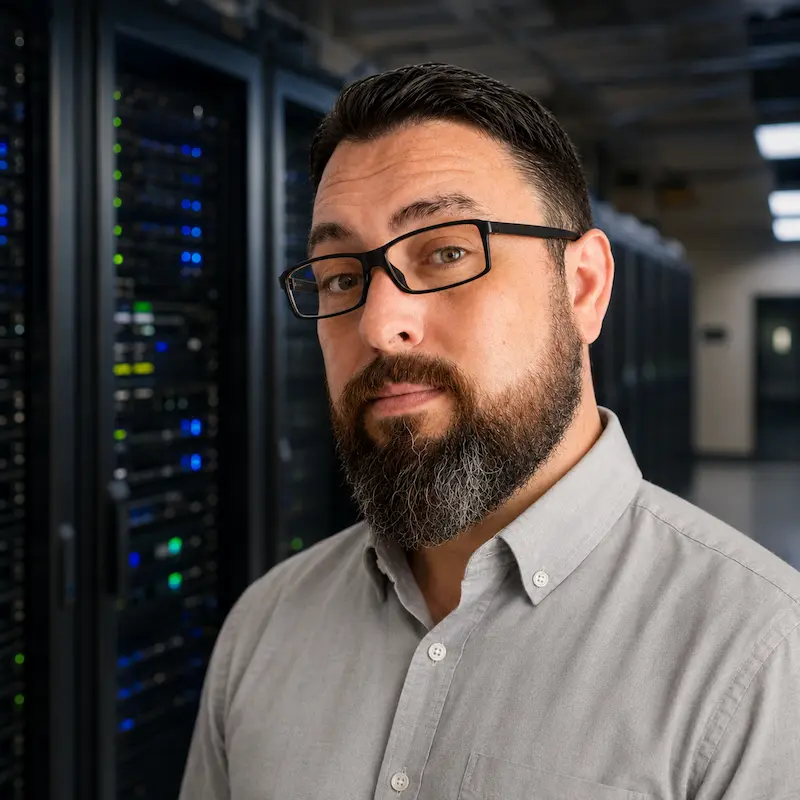
Book straight onto Chris's calendar. No sales rep and nothing to prepare: you talk with the engineer who would actually scope the work.