A contract nobody senior has read.
The smart contract is written and it compiles. What no one has checked is what it actually does when real money moves through it, and by the time that shows up it's on chain and immutable.
We build on-chain applications, wallets, and token systems that hold up in production: audit-ready contracts, the off-chain layer that does the heavy lifting, and the custody and security practices that keep real value safe. Deep EVM experience with rollouts across Ethereum, Polygon, Base, BNB Chain, Fantom, Aurora, and Avalanche, plus builds on Solana, NEAR, and ICP. When a database is the honest answer, we say so on the first call.
The smart contract is written and it compiles. What no one has checked is what it actually does when real money moves through it, and by the time that shows up it's on chain and immutable.
Half-finished, the original engineers gone, and the code they left behind is the only documentation. That's a rescue, and we do those.
The business has to accept or pay in stablecoins, or plug into a custody provider, without reorganizing the whole company around a token. The chain should be plumbing, not the identity.
The contract is fine. It's the off-chain half, the indexer, the APIs, the wallet flow, the actual application, where the project is bleeding out.
Supply, vesting, and treasury mechanics are getting decided in the week before launch. An economy designed in a rush is one the market gets to redesign for you.
Who holds the keys, who signs, and what happens when that person leaves has never been written down. You're one departure or one phish away from a very bad week.
Any honest chain product is mostly ordinary engineering, and the on-chain part is small, unforgiving, and permanent when it's wrong. We build both with the weight they deserve, and we start by questioning what belongs on chain at all.
Contracts get written to be read by an auditor: deterministic, tested against the edge cases, documented, and structured so a third-party review has something clean to work with. We work in Solidity across the EVM chains and in Rust where the chain calls for it, and we manage the audit rather than pretending our own read replaces one.
Around the contract we build the part people actually touch: the indexer that turns raw events into data you can query, the APIs, and the application itself. That's ordinary senior engineering done to production standards, and it's exactly where most chain projects quietly die.
Wallets are where users meet the chain, and where mistakes cost real money. We build wallet flows people can actually use: onboarding that doesn't open with a seed-phrase lecture, signing that's hard to fumble, and recovery thought through before anyone needs it.
For businesses that need chain rails without becoming a crypto company, we wire the plumbing: stablecoin payment flows, custody-provider integrations, and wallet auth inside an otherwise ordinary application. The chain stays plumbing instead of becoming the identity.
A token is a product decision and an economy, not just a contract. We design the mechanics with you (supply, distribution, vesting, incentives, treasury controls) and argue them out on paper before anything is minted, because an economy launched in a rush is one the market redesigns for you.
Then we build it: the token contracts, the vesting and distribution machinery, and the treasury tooling, tested like everything else we ship. On the regulatory side we build to what your counsel signs off on; we're engineers, not securities lawyers, and we won't blur that line.
Custody is practice, not just tooling. We set up or review key management so nothing hinges on one person's laptop: who signs, with what, from where, and what happens when someone leaves, written down and drilled. The same goes for the security posture of what you've already built; we'll review it and tell you where it's soft.
Where digital assets meet regulation, KYC/AML and reporting get designed into the architecture from day one, by people who have stood up a KYC/AML program from scratch. Monitoring and an incident-response plan round it out, in place before launch, not after the first scare.
Our founder was co-founder and CTO of an NFT marketplace on the NEAR blockchain: he assembled its engineering team and helped raise a $9M seed round. Alongside him is a solutions architect whose background is e-commerce and blockchain, across Python, TypeScript, Solidity, and Rust. This isn't a first attempt dressed up as expertise.
Deep EVM work with production rollouts across Ethereum, Polygon, Base, BNB Chain, Fantom, Aurora, and Avalanche, plus builds on Solana, NEAR, and ICP. The chain gets picked from your problem, not from our comfort zone, and we'll say plainly when it points somewhere new.
A KYC/AML program stood up from scratch at Guardian Circle, and PCI-DSS implemented for payment platforms wired directly into banks. Regulated money movement is familiar ground here, not a first.
You approve scope and price before we start, and changes are quoted, never absorbed into a surprise invoice. When the scope is still being discovered we work hourly against a cap you set, then convert to a fixed quote once the ground is known. Every engineer is a US citizen working in the US, and you own everything: the contracts, the code, and the keys. No lock-in, and no one else holding your custody.
Honestly, most companies don't, and we'll tell you so on the free call even though it ends the conversation. A database is faster, cheaper, reversible, and the right answer for the large majority of problems people bring to a chain. A blockchain earns its place in a narrower set of cases: a genuine digital asset, trustless settlement between parties who don't trust each other, verifiable on-chain ownership, value that has to move without a middleman. If that's you, good, it's exactly the work we take. If it isn't, we'll point you at the boring answer that will serve you better and cost you less.
Most of our work is EVM: Solidity contracts and the applications around them, with production rollouts across Ethereum, Polygon, Base, BNB Chain, Fantom, Aurora, and Avalanche. Beyond the EVM world we've built on Solana, NEAR, and ICP, including a venture-backed NFT marketplace on NEAR. The chain is a decision, not a preference: we pick it from the problem (settlement needs, fees, ecosystem, where your users and liquidity already are), not from whatever is fashionable this quarter. And if your requirements point somewhere we'd have to ramp up on, we'll say that plainly instead of steering you toward the one we know best.
We write contracts to be audited, and we manage the audit, but we are not an audit firm and won't pretend to be one. Our job is to hand a professional auditor clean, tested, documented code, coordinate the engagement, and fix what they find. Any firm that tells you its own review replaces an independent audit is a firm to walk away from. For anything holding real value, an independent audit isn't optional, and we'll help you get a good one rather than claim you can skip it.
Yes, on both the engineering and the design. We write the token contracts (minting, vesting, distribution, treasury controls) and work through the economy with you: supply, incentives, and how value moves, argued out on paper before anything is on chain. What we don't do is securities law. A token launch carries real regulatory weight, so we build to what your counsel signs off on, and having stood up KYC/AML programs before, the compliance conversation is familiar ground. And if the token doesn't serve the product, we'll say that too: plenty of good chain products don't need one.
Yes, and it's common: a half-built product, the original devs gone, and the code they left as the only documentation. We assess what you have, tell you honestly what's salvageable and what isn't, stabilize it, then extend it. That's a rescue engagement, and the ladder works the same for a chain product as for any other codebase. Our rescue page walks through how it runs.
Thirty minutes over Google Meet, no pitch. Describe the product, the token, or the custody question in front of you, and we'll give you an honest read: what belongs on chain, what a database would do better, and what a production-grade build would take.
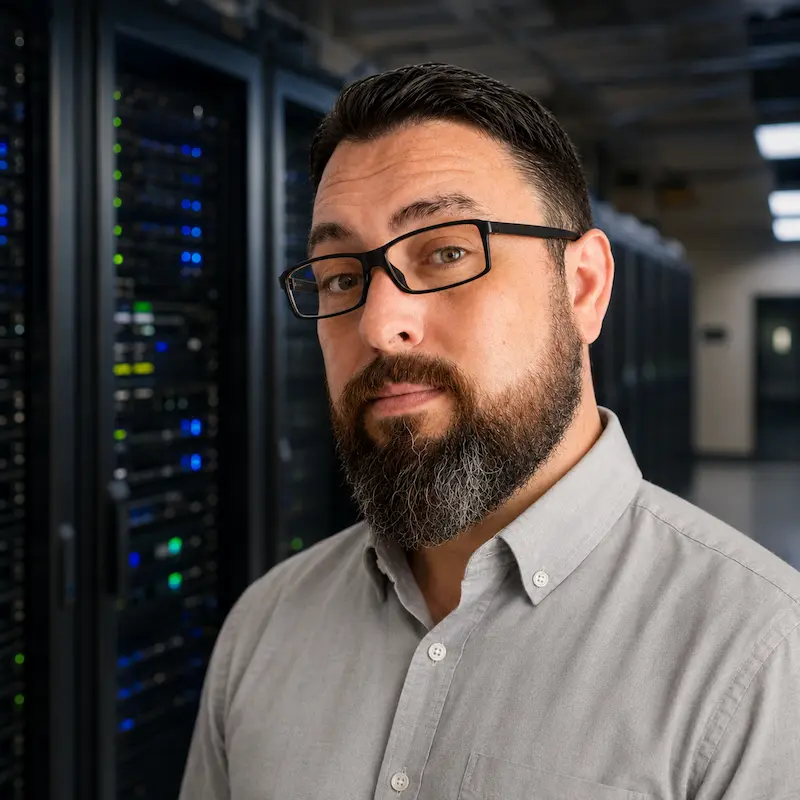
Book straight onto Chris's calendar. No sales rep and nothing to prepare: you talk with the engineer who would actually scope the work.