Quoting lives in one head.
Your best estimator prices from memory and a folder of old jobs. When they're out, quotes slow to a crawl, and when they retire, the pricing logic walks out with them.
AmiFi is an engineering firm based in the South Bay of Los Angeles. We automate the paperwork between your front office, your ERP, and the shop floor: quotes and POs that stop getting re-typed, travelers and cert packets that assemble themselves, and prime flow-downs that stop living in someone's inbox.
Your best estimator prices from memory and a folder of old jobs. When they're out, quotes slow to a crawl, and when they retire, the pricing logic walks out with them.
A purchase order lands as a PDF or an email, and someone keys 40 line items into Epicor or JobBOSS by hand. A transposed quantity or a missed revision doesn't surface until the part is wrong.
First-article paperwork, material certs, and cert of conformance get gathered from three systems and a filing cabinet the night before a shipment, and one missing document holds the whole thing on the dock.
A revised spec or a new quality clause from your prime shows up as an email attachment. Whether it reaches the traveler and the buyer depends on someone remembering to forward it.
Schedules live in the ERP, the floor runs off printed travelers and a whiteboard, and the two only reconcile when someone walks the shop with a clipboard.
The real schedule, the hot list, and the shortage report are a workbook on one machine. It works right up until that person is out, and then nobody can answer where a job stands.
The same senior engineers who build the automation run the Roadmap discovery themselves, usually starting on your floor. Here's the kind of work we take off your people, built into the systems you already run, with custom code where the integration doesn't exist yet.
An RFQ or purchase order arrives as a PDF or an email. We read the line items, quantities, part numbers, and revision level off it, match them against your part master and prior jobs, and surface pricing history so a quote starts from data instead of a blank sheet.
Once an order is accepted, the same pipeline creates the job and the traveler in your ERP, so the shop-floor packet reflects the current revision instead of last month's print. Price variances and unrecognized revisions get flagged for a human instead of flowing through silently.
Cert of conformance, material certs, and first-article documentation get gathered from wherever they live and assembled into the packet a customer or a prime actually requires, keyed to the right part and revision. For AS9102 first-article work, that means the forms and the balloon-numbered drawing line up instead of being reconciled by hand at ship time.
We don't replace your quality judgment or your QMS. We remove the manual gathering and the last-minute scramble, and we make a missing document something the system catches days early instead of on the dock.
When a prime sends a revised spec, a new quality clause, or a flow-down requirement, we route it out of the inbox and into the places it has to reach: the traveler, the buyer, the quality record, and the affected open jobs. Nothing depends on one person remembering to forward an attachment.
You get a record of which requirement landed where and when, which is exactly the trail an auditor or a customer quality survey asks for.
Receiving, inventory moves, and job status stop being a clipboard walk. We close the gaps where the ERP and the floor disagree: packing slips reconciled against POs at receiving, stock and shortage positions kept current, and job status visible without someone rebuilding a spreadsheet.
The planner's hot list becomes something the whole team can see instead of a workbook on one machine.
Our founder started running network administration at SV Microwave, an aerospace RF-components manufacturer, before moving into payments and healthcare engineering. We know what a traveler, a cert packet, and a prime flow-down actually are, so discovery isn't us learning your business on your dime.
No offshore handoffs, no overseas access to your systems or your prints. When export-controlled data is in scope, we scope the work so controlled information stays in your environment and access is limited to US persons, and we put that in writing. Your compliance program stays yours.
We've shipped software under real scrutiny: PCI-DSS payment systems, KYC/AML programs, and internal systems inside a Fortune 500 healthcare company. We build around an AS9100 QMS and its documentation trail rather than cutting across it.
We integrate with Epicor, JobBOSS, E2, Global Shop, or whatever you run, instead of replacing it. Code, data, and documentation are in your name from day one. No lock-in: any competent engineer can pick up our work.
Every AmiFi engineer is a US citizen working inside the United States. We don't offshore, we don't subcontract abroad, and no one overseas ever touches your systems or your data. When export-controlled prints are in scope, we scope the work so controlled data stays in your environment and access is limited to US persons, and we put that in writing. We are not making an ITAR registration or certification claim for you: your compliance program stays yours. What we remove is the offshore-access problem that rules out most software vendors before the conversation starts.
No. The shop that already runs Epicor, JobBOSS, E2, Global Shop, or a homegrown system doesn't need a second one. We build around what you have: reading quotes and POs into it, pushing travelers and receiving out of it, and closing the gaps where people re-key data between the ERP and the floor. If the ERP genuinely can't do something, we'll tell you that in the Roadmap instead of selling you a migration.
We won't replace an estimator's judgment, and we won't pretend to. What we can do is take the mechanical part off their plate: pulling line items and revisions off an incoming RFQ or PO PDF, matching them to your part numbers and prior jobs, and surfacing the pricing history so the estimate starts from data instead of a blank sheet. The person still makes the call. They just stop rebuilding the same lookup every time a print comes in.
There's no published price because the honest number depends on how many systems we're wiring together and how much of your paperwork we're taking on. It starts with a free 30-minute call over Google Meet where we hear the scope, then a fixed-fee, two-week Automation Roadmap that hands you a ranked plan and a fixed build quote before you commit to anything. If you build with us, the Roadmap fee is credited against the build. You'll know the number before a line of code is written.
The shops that feel this most are the ones where one planner holds the schedule together in spreadsheets and a cert packet is assembled by hand the night before it ships. You don't need a factory of a thousand for the math to work. If pulling ten hours a week of re-keying and paperwork off two or three people pays for the build in a reasonable window, we'll say so. If it doesn't, we'll tell you that too, and part as friends.
Tell us where the re-keying and the paperwork pile up. In a free 30-minute call over Google Meet, we'll tell you what's worth automating between your front office, your ERP, and the floor, and what isn't. If it's worth it, the Roadmap usually opens with a day or two on your floor.
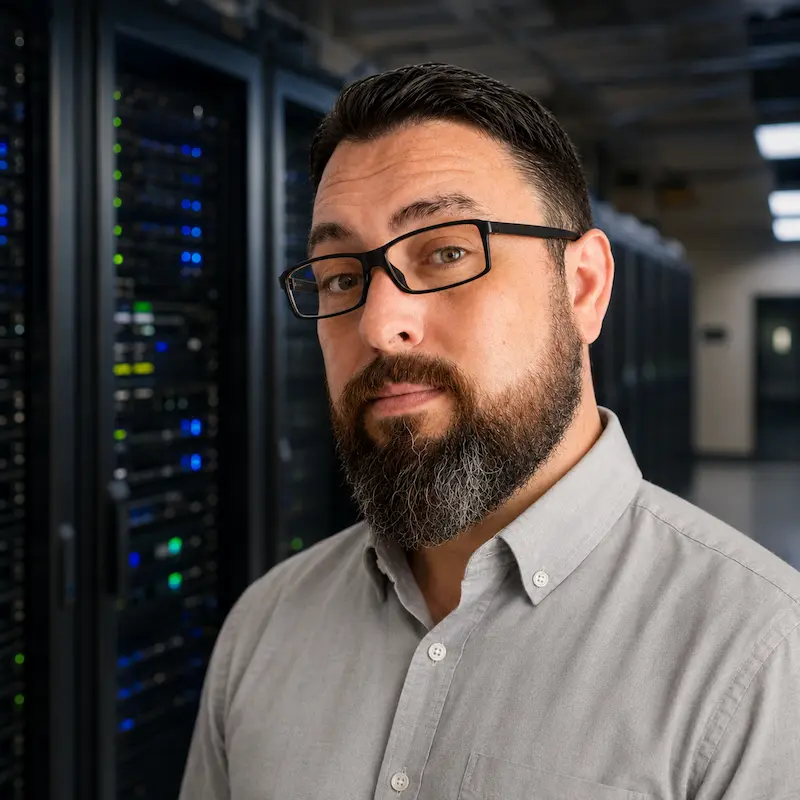
Book straight onto Chris's calendar. No sales rep and nothing to prepare: you talk with the engineer who would actually scope the work.