Your staff is re-working denials and re-keying charts by hand.
AmiFi is an engineering firm in the South Bay of Los Angeles, with real billing-domain experience on the team. We automate the paperwork around care: denials that get re-worked by hand, eligibility and prior auth chased one portal at a time, and the double-entry between your EHR and your billing system, with a human kept in the loop wherever judgment or compliance demands it.
US-based engineers · works with your EHR · built to your compliance requirements
The admin around a patient visit is eating your revenue cycle.
Denials get re-worked by hand.
A claim comes back denied, and someone reads the remittance code, digs up the claim, and rebuilds the appeal from scratch. The ones nobody has time to work just get written off, and that's revenue you earned walking out the door.
Eligibility checked one portal at a time.
Verifying coverage before a visit means logging into a payer portal, keying in the member, and reading back the result, over and over. When it gets skipped, the denial shows up weeks later.
Prior auth lives on hold and fax.
Getting an authorization means payer portals, faxed forms, and time on hold, then tracking which requests are still open. A missed or expired auth turns into a denied claim after the care is already delivered.
The EHR and billing don't talk.
The same patient, insurance, and charge data gets keyed into the EHR and then again into the billing system. A transposed member ID or a missed modifier doesn't surface until the claim bounces.
Reporting is stitched together by hand.
The number you actually need, days in AR, denial rate by payer, what's unbilled, lives across the EHR, the clearinghouse, and the billing platform, and someone rebuilds it in a spreadsheet every month.
Intake re-typed off paper and PDFs.
Demographics, insurance cards, and intake forms arrive on paper, as scans, or through a portal, and a front-desk person re-types them into the system while a waiting room fills up.
// what we automate
The revenue cycle, wired end to end, with review where it counts.
The same senior engineers who build the automation run the Roadmap discovery themselves, sitting down with your front desk and your billers to learn how your revenue cycle actually runs. Here's the kind of work we take off your people, built into the systems you already use, with a human kept in the loop wherever judgment or compliance demands it.
01
Claims & Denials Pipeline
RECOVER EARNED REVENUE
When a remittance comes back with a denial, we parse the reason code, match it to the original claim, and draft the appeal with the supporting detail attached, so working a denial starts from a draft instead of a blank page. The clean, high-confidence cases move; the low-confidence ones land in a coder's queue with the reason spelled out.
This is the healthcare pipeline on our home page, and it's built the way we build all of them: the model does the mechanical work, and a person makes the call where coding judgment or compliance requires it.
WHAT YOU WALK AWAY WITH
Denial reason codes parsed and matched to the original claim
Appeals drafted with supporting detail for a coder to review
Low-confidence cases routed to a human queue, not filed automatically
02
Eligibility & Prior Authorization
CATCH IT BEFORE THE VISIT
We run eligibility checks against the payer ahead of the visit, read back coverage and benefit detail, and flag the mismatches, so a coverage problem surfaces before care is delivered instead of weeks later as a denial. For prior authorization, we assemble the request from the chart and the payer's requirements and track which authorizations are open, approved, or expiring.
Where a payer needs a human to make the call or work an exception, the system hands it off with everything gathered, instead of making a front-desk person start from scratch.
WHAT YOU WALK AWAY WITH
Eligibility verified ahead of the visit, mismatches flagged early
Prior-auth requests assembled from the chart and payer rules
Open, approved, and expiring authorizations tracked in one place
03
Intake & EHR-to-Billing Sync
END THE DOUBLE-ENTRY
Patient intake, whether it arrives on paper, as a scanned insurance card, or through a portal, gets read, structured, and put into the system once, so your front desk stops re-typing demographics and insurance while the waiting room backs up. Between the EHR and the billing system, we close the gaps where the same data gets keyed twice and a transposed field turns into a rejected claim.
One entry, checked, instead of the same information typed into two systems and reconciled after a claim bounces.
WHAT YOU WALK AWAY WITH
Intake and insurance data captured once from paper, scans, or a portal
EHR and billing kept in sync without double-entry
Mismatched or missing fields flagged before a claim is submitted
04
Cross-System Reporting
ONE CURRENT VIEW
The numbers that run a practice, days in AR, denial rate by payer, unbilled encounters, what's stuck and why, live across the EHR, the clearinghouse, and the billing platform. We pull them into one current view so the month-end report stops being a manual spreadsheet rebuild and starts being something you can look at any day of the week.
You see where revenue is leaking while there's still time to do something about it, instead of learning it a month after the fact.
WHAT YOU WALK AWAY WITH
Days in AR, denial rate, and unbilled work in one current view
Numbers pulled from the EHR, clearinghouse, and billing automatically
An exception list showing exactly what's holding each unbilled encounter
// why amifi
Senior US engineers who've worked in medical billing, not just around it.
We've worked inside billing and healthcare.
Dave Gunkel brings more than a decade in medical coding and billing to the team, and our founder led an internal application development team inside DaVita, a Fortune 500 healthcare provider, serving 30,000 daily users. We know what a remittance, a denial code, and an eligibility check actually are, so discovery isn't us learning your revenue cycle on your dime.
Every engineer is a US citizen working in the US.
No offshore handoffs, no overseas access to your systems or your patients' data. When PHI is in scope, we scope the work so it stays in your environment and inside the country, and access is limited to the people who need it. Your compliance program stays yours.
We build with your compliance requirements in the room.
We've shipped software under real scrutiny: PCI-DSS payment systems, KYC/AML programs built from scratch, and internal systems inside a Fortune 500 healthcare company. We are not selling you a HIPAA certification. We build your privacy and security requirements into the design from day one and put the commitments in writing.
Human review stays where judgment demands it.
The model drafts appeals, matches claims, and flags exceptions; your coders and billers make the calls that require judgment. And everything we build is yours: code, data, documentation. No lock-in, and any competent engineer can pick up our work.
// questions from the front office
What practices ask before booking.
Can you work with our EHR?
We integrate through the interfaces your EHR and its vendors actually expose: the APIs, the HL7 or FHIR feeds, the export and reporting tools, and the clearinghouse connections that are already there. Where a system is genuinely closed, we'll tell you that plainly instead of promising a connection that doesn't exist, and we find the next-best path, which is often a reporting export or a supervised data hand-off. We work around Epic, athenahealth, eClinicalWorks, or whatever you run. We're not going to make you switch EHRs to work with us.
How do you handle patient data and PHI?
Honestly, and without overstating it. We are not handing you a HIPAA certification, because that isn't something a software vendor hands out, and we won't claim a compliance posture we haven't earned on your project. What we do is build with your compliance requirements in the room from day one: your privacy and security rules shape the design before any code is written, access is scoped to the people who need it, and because every AmiFi engineer is a US citizen working inside the United States, PHI never leaves the country when we build your systems that way. If your compliance program has requirements for the vendors it works with, we talk them through in scoping rather than papering over them.
Do you replace our billing service, or work with it?
Either way. If you run billing in-house, we take the manual work off your billers: the denial rework, the eligibility checks, the re-keying between systems. If you outsource to a billing service, we automate the pieces around them, the clean hand-offs, the document intake, and the reporting that tells you whether the arrangement is actually working, without forcing a change to that relationship. Plenty of practices keep their billing service and still have a mountain of front-office work worth automating. We don't need to displace anyone to be useful.
Will AI be making clinical or coding decisions?
No. The model drafts, matches, and flags; a person makes the call wherever judgment or compliance demands it. On a denial, for example, the system parses the remittance, matches it to the claim, and drafts the appeal, but a low-confidence case lands in a coder's queue for a human to decide, exactly like the pipeline on our home page. We're not replacing your coders or your billers, and we won't pretend automation removes the need for their judgment. We remove the mechanical work around it.
We're a small practice. Is this overkill for us?
The practices that feel this most are the ones where one or two people hold the whole revenue cycle together: working denials between patients, chasing eligibility one portal at a time, and re-keying intake off paper. You don't need a hospital's volume for the math to work. If pulling several hours a week of rework and re-keying off your front office and your billers pays for the build in a reasonable window, we'll say so. If it doesn't, we'll tell you that too, and part as friends.
Tell us where the rework and the re-keying pile up. In a free 30-minute call over Google Meet, we'll tell you what's worth automating across your intake, your eligibility and prior auth, and your claims and denials, and what isn't. If it's worth it, the paid Roadmap digs into how your revenue cycle actually runs.
Based in the South Bay of Los AngelesOn-site across LA & Orange CountyRemote clients welcome
SCHEDULE DIRECTLY
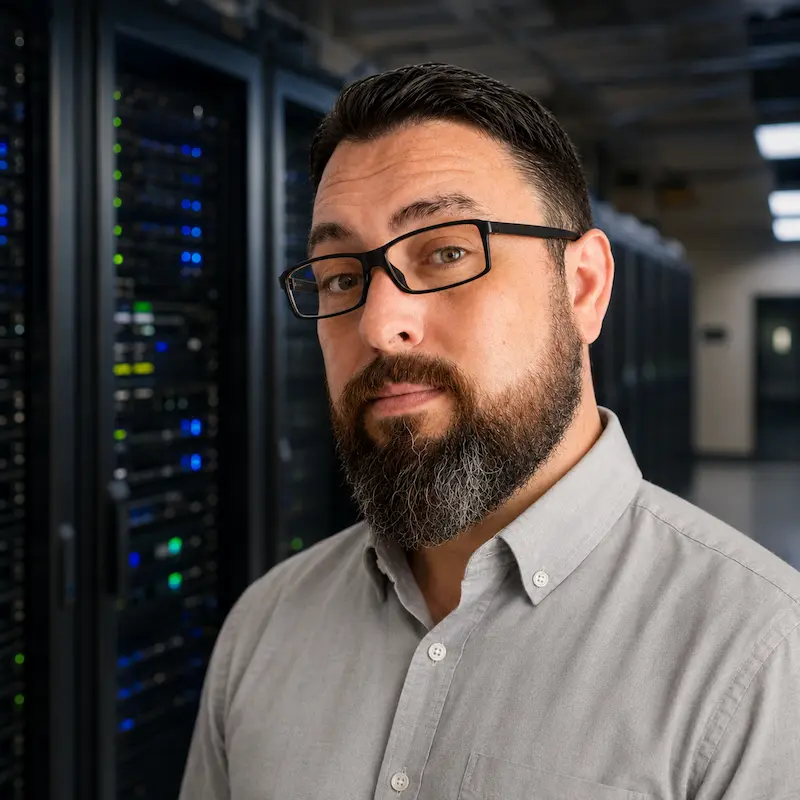
Chris Hayes
Founder & Principal Engineer
Book straight onto Chris's calendar. No sales rep and nothing to prepare: you talk with the engineer who would actually scope the work.