The container moves in a day. The paperwork behind it takes a week.
Long Beach runs on the port: forwarders, brokers, drayage, 3PLs, and the businesses importing through the complex, plus a downtown full of clinics and small operators. AmiFi is a South Bay firm of senior US-based engineers. We're not freight veterans; we automate document-heavy, disconnected operations. You know the shipments; we wire the paperwork and the systems together, so your people stop being the integration layer.
Every shipment is a small paperwork project.
Documents parsed by hand.
A customs packet lands as a dozen mixed PDFs and scans, and someone reads each one and re-types the details into the system. Multiply by every shipment, every day.
Systems that don't talk to each other.
The TMS, the carrier feeds, the customs filing, the broker's software, and email each hold a piece. A person copies data between them all day long.
The where's-my-container calls.
Customers call for status because there's no clean way to push updates, so a coordinator drops what they're doing to go look it up.
Invoicing and accessorials that leak money.
Detention, demurrage, and accessorial charges reconciled by hand, and the ones that slip through are revenue that just walks away.
Compliance and audit trails assembled manually.
HS codes, entry records, and proof-of-delivery pulled together by hand when a customer, carrier, or regulator asks.
For downtown clinics and small shops, the same story.
Intake, eligibility, scheduling, and billing handled by people re-keying between portals that were never designed to connect.
We watch a Long Beach shipment move, then automate it.
The same senior engineers from first call to production. We don't arrive with a generic logistics diagram; we map the workflow you actually run, learning your operation from the people who do the work.
- 01
Intro Call, Over Meet
FREE · 30 MIN · GOOGLE MEETThirty minutes over Google Meet. Walk us through the paper: a shipment, an entry, an intake, from the moment it arrives to the moment it's billed, and who actually touches it along the way.
You'll get an honest read by the end of the call. If automation won't pay off, we say so. If it will, we name the highest-value targets, usually the document parsing and the system-to-system handoffs, and quote the Roadmap, where we usually come see it in person.
WHAT YOU WALK AWAY WITH- An honest read on whether automation is worth it here
- The highest-value targets in your operation, ranked
- A fixed fee for the Roadmap if you want to go deeper
- 02
The Automation Roadmap
FIXED FEE · 2 WEEKSA fixed-fee, two-week engagement. It usually opens with a day or two on-site, mapping how documents and data move between your TMS, the carrier feeds, customs, and the broker, and ranking the targets by projected time and dollar return.
You get a written plan you own, with a fixed build quote. Build with us and the Roadmap fee is credited against it; hand it to your own team, and it still stands on its own.
WHAT YOU WALK AWAY WITH- A map of how documents and data move through your operation
- Ranked automation targets with projected returns
- An integration plan across your TMS, carrier feeds, and customs systems
- A fixed quote and timeline for the build
- 03
Build, Integrate, Support
FIXED SCOPE · WEEKSYou approve a fixed scope before we build. Then we automate the document parsing, wire the systems together, and push clean status to your customers, shipping working software in weeks.
Everything is yours: code, data, documentation. We support it on terms that fit a 24/7 operation, and being local means we're reachable when a live shipment can't wait.
WHAT YOU WALK AWAY WITH- Production automation running inside your systems
- Cleaner status, invoicing, and audit trails
- Local support sized to how your operation runs

Senior engineers who show up when it counts, and stay in the country.
- Based in the South Bay, minutes up the freeway.
The first call is over Google Meet, but we're a straight shot from your dock or downtown office, so when a visit is warranted it's a drive, not a travel line item. A real local firm, not a landing page.
- Senior, US-based engineers only.
Every engineer is a US citizen working in the United States. No offshore handoffs, no overseas access to your shipment data or your systems.
- You know freight; we know the engineering.
We're not freight veterans, and we don't pretend to be. We're senior engineers who automate document-heavy, disconnected operations, and the free call and then the Roadmap's observation days are how we learn yours. You stay the domain expert.
- Fixed quotes for defined work.
A defined-scope build is a fixed quote you approve before we start. Support runs as a retainer sized to your operation. When a flat rate doesn't make sense, we work hourly against a cap you approve, moving to a fixed quote once the ground is known.
- Built for regulated, audited work.
PCI-DSS implementations, KYC and AML programs, and Fortune 500 healthcare systems. We build to your compliance requirements and put the data-handling story in writing.
What Long Beach operators ask first.
Do you have logistics or freight experience?
Honestly, no, not the way a customs broker or a drayage dispatcher does, and we won't pretend otherwise. Nobody on our team came up in freight. We're senior software engineers who automate document-heavy, disconnected operations, and we've done it in payments, healthcare, and manufacturing-adjacent work. A port operation is full of exactly that kind of work. You know your shipments, your filings, and your customers; we know how to automate the paperwork and stitch the systems together. The free intro call and then the Roadmap's observation days, usually spent on your dock, are how we learn your operation before anyone quotes anything, and if we don't think we're the right fit, we'll say so.
Do you come to us?
Yes, when the work calls for it. The first call is 30 minutes over Google Meet, so there's nothing to schedule around and no travel on either side. If it makes sense to go further, AmiFi is based in the South Bay, a straight shot from the port, so a visit is a drive, not a travel line item. The Roadmap usually opens with a day or two at your office or warehouse, because the way a shipment's paperwork actually moves never matches the flowchart.
What kinds of Long Beach businesses do you work with?
Operations businesses, mostly: freight forwarders, customs brokers, drayage and trucking outfits, 3PLs and warehouses, and the companies importing through the complex. We also work with the healthcare providers, clinics, and small businesses downtown. If your team lives in documents and portals, we can help.
What does it cost?
A defined-scope build is a fixed quote you approve before we start; changes are quoted, never absorbed into a surprise invoice. Ongoing support runs as a retainer sized to your operation. When a flat rate doesn't make sense, we work hourly against a cap you approve and move to a fixed quote once the ground is known. The first call is free, and the two-week Automation Roadmap is a single fixed fee quoted on that call.
Can you work with our TMS and the carrier and customs systems?
That's the heart of what we do. Most of the pain in a port operation is the manual bridge between your TMS, the carrier feeds, customs filings, the broker's system, and email. System integration and data plumbing is our core competency: we build into what you already run and automate the handoffs between those systems rather than replacing anything. You tell us how the pieces are supposed to fit; we wire them together.
Is it remote or on-site?
The free intro call is over Google Meet, always. The Roadmap usually opens with observation days at your site, and being based minutes up the freeway means that's a drive, not a hassle. Build work is mostly remote, and we come out when the work calls for it.
Talk to an expert in Long Beach.
Tell us where the paperwork piles up. The first conversation is 30 minutes over Google Meet: no travel on either side, and an honest read on what's worth automating by the end of it. If a visit makes sense, we're a straight shot up the freeway to your dock, a drive, not a travel line item. Free, no prep, no pitch deck.
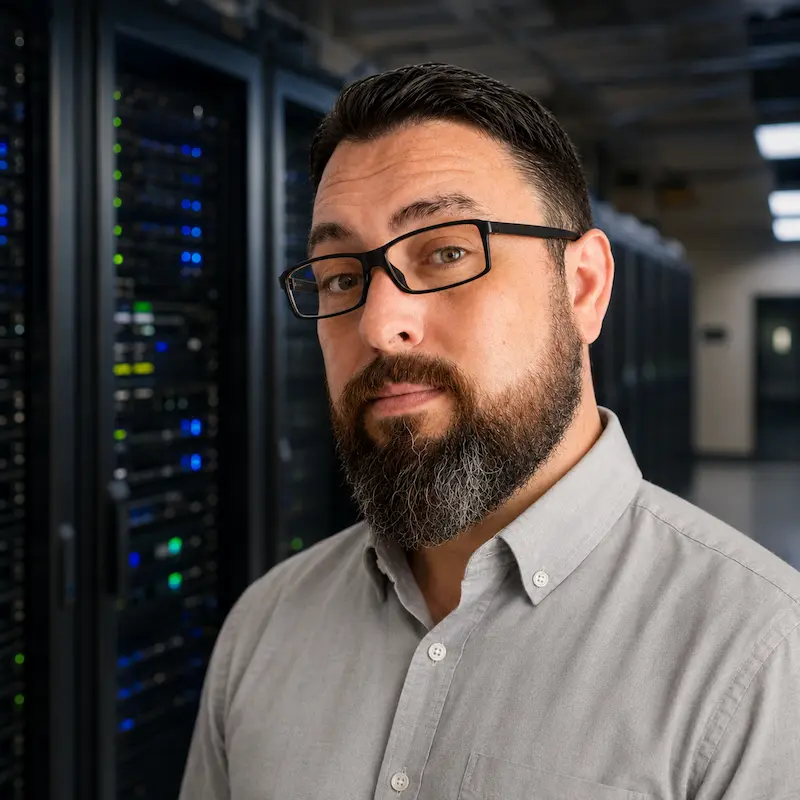
Book straight onto Chris's calendar. No sales rep and nothing to prepare: you talk with the engineer who would actually scope the work.
- Where your team's hours actually go.
- What's worth automating, and what isn't.
- A concrete next step, or an honest no.