Intake goes cold after hours.
A prospective client calls at night or fills out a web form on the weekend, and the lead sits until someone runs a conflict check and opens a matter on Monday. By then they've called the firm down the street.
AmiFi is an engineering firm based in the South Bay of Los Angeles. We automate the work around the practice of law: intake that stops going cold after hours, documents that assemble themselves from your templates, and matter status your clients can get without an email, all with a lawyer reviewing what the AI produces. You keep the judgment; we automate the busywork.
A prospective client calls at night or fills out a web form on the weekend, and the lead sits until someone runs a conflict check and opens a matter on Monday. By then they've called the firm down the street.
Engagement letters, retainers, and standard filings get rebuilt from the last similar one, with the names and terms swapped by hand. It's slow, and a missed find-and-replace is how the wrong client's name ends up in a document.
A status question means someone opens the file, reads the recent activity, and writes a reply. Multiply it across a full caseload and it's hours a week of a lawyer or paralegal answering questions the system already knows the answer to.
Billable minutes slip away uncaptured, and trust-accounting hygiene, keeping client funds reconciled and the three-way balance clean, gets done by hand under deadline pressure. Both are money and both are risk.
A matter turns up thousands of documents, and finding what's responsive and flagging what might be privileged means a person reading through all of it, or an expensive tool nobody configured well.
Statutes, filing dates, and hearing calendars are tracked across a shared calendar and a few memories. A single missed date isn't an inconvenience; it's a malpractice problem.
The same senior engineers who build the automation run the Roadmap discovery themselves, sitting down with your intake staff, your paralegals, and your attorneys to learn how the firm actually runs. Here's the kind of work we take off your people, built into the tools you already use, with a lawyer reviewing what the AI produces before anything leaves the firm.
An after-hours voicemail or a web-form inquiry gets transcribed, run through a conflict check against your existing matters, and turned into a structured intake, with the matter opened in your practice-management system and a brief sent to the on-call attorney within minutes. This is the legal pipeline on our home page, built exactly the way we build them.
The lawyer still decides whether to take the matter. What changes is that the decision arrives with the facts gathered and the conflicts checked, at midnight, instead of a callback slip on Monday.
Engagement letters, retainers, standard filings, and routine correspondence get drafted from your own templates and the matter's data, so a document starts as a near-final draft with the right names, terms, and clauses in place instead of a hand-edited copy of the last one. The draft is grounded in your documents through retrieval, not invented by the model.
Then a lawyer reviews and signs off. The AI removes the mechanical assembly; the attorney keeps the judgment and the responsibility for what goes out. Nothing files itself.
A where-are-we question gets answered from the system instead of a lawyer reopening the file: current status pulled from your practice-management data and turned into an update a client can actually read. Key dates, statutes, filing deadlines, and hearings are tracked with reminders, so a deadline is something the system surfaces early, not something that depends on one person remembering.
Clients stay informed without an attorney drafting the same update by hand, and the calendar stops being a malpractice exposure held together by memory.
On a document-heavy matter, we run retrieval across the set to surface what's likely responsive, cluster related material, and flag candidates that may be privileged, so your reviewers start from a ranked, organized pile instead of page one of thousands. Every candidate carries the source so a reviewer can verify it fast.
We're honest about what this is: a first pass that speeds up human review, not a replacement for it. A lawyer still makes the responsiveness and privilege calls. The software gets your people to the documents that matter faster.
We're not lawyers and we don't pretend to be. We're senior engineers who build review-in-the-loop systems, where the AI drafts and organizes and a lawyer decides. Discovery is where we learn how your firm actually runs, before anyone quotes a build. You stay the expert on the law and the responsibility for the work.
No offshore handoffs, no overseas access to your matters or your clients' data. What we build keeps your data in your systems, and we don't train models on your files. For a firm whose whole obligation is confidentiality, that rules out most software vendors before the first call.
Payment platforms under PCI-DSS, KYC/AML programs built from scratch, and internal systems inside a Fortune 500 healthcare company. Confidential data, audit trails, and getting the sensitive path exactly right are squarely the kind of work we've done where the stakes were real.
We integrate with Clio, MyCase, PracticePanther, or whatever you run, instead of replacing it. Code, data, and documentation are in your name from day one. No lock-in: any competent engineer can pick up our work.
That's a question for your bar and your own professional judgment, and we won't give you legal advice on it. What we can tell you is how we build. Courts and bar associations broadly expect competence and supervision, so we build review-in-the-loop systems: the AI drafts, organizes, and surfaces, and a lawyer reviews and signs off before anything goes out the door or into a filing. The technology stays a tool your people supervise, not a decision-maker. If your jurisdiction or a specific court has rules about AI use or disclosure, you set that requirement and we design around it.
It can, and any vendor who tells you their AI never makes things up is selling you something. We build against it two ways. First, retrieval: the system answers from your documents and your matter data, not from the open internet or the model's memory, so a draft is grounded in the actual file. Second, review-in-the-loop: a person checks the work at the point that matters, and the system shows its sources so that check is fast. We're honest about the limits and build the human sign-off in, rather than pretending it isn't needed.
No. If you run Clio, MyCase, PracticePanther, Smokeball, or something homegrown, you don't need a second system. We build around it: reading intake into it, assembling documents from it, pulling matter status out of it, and closing the gaps where your people re-key between it, email, and your billing. If it genuinely can't do something, we'll say so in the Roadmap instead of selling you a switch.
Every AmiFi engineer is a US citizen working inside the United States. We don't offshore and we don't subcontract abroad, so no one overseas ever touches your matters or your clients' data. What we build keeps your data in your systems, we don't train models on your files, and access is scoped to the people who need it. For a firm whose whole obligation is confidentiality, that alone rules out most software vendors before the first call.
A defined-scope build is a fixed quote: you approve the scope and the number before we start, and changes are quoted, never absorbed into a runaway invoice. There's no published price because the honest number depends on how much of the work you're taking off your people. It starts with a free 30-minute call over Google Meet, then a fixed-fee, two-week Automation Roadmap that hands you a ranked plan and a fixed build quote before you commit, credited toward the build if you proceed. Small firms are often where this pays off fastest, because the same one or two people do intake, drafting, billing, and follow-up all at once.
Tell us where the intake, the drafting, and the status chasing pile up. In a free 30-minute call over Google Meet, we'll tell you what's worth automating around your practice, and what isn't. If it's worth it, the paid Roadmap digs into how the firm actually runs, with a lawyer kept at every point of judgment.
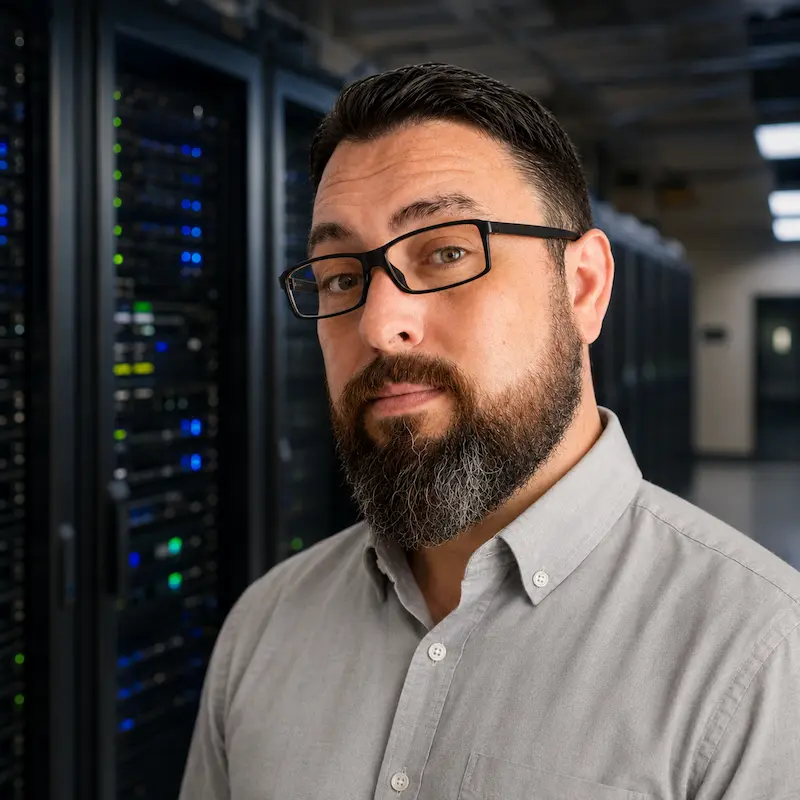
Book straight onto Chris's calendar. No sales rep and nothing to prepare: you talk with the engineer who would actually scope the work.