Paperwork that reads itself.
Invoices, POs, applications, and packets arrive as PDFs and email. AI reads them, pulls the fields, and posts them where they belong, with nobody keying line by line.
You've heard AI will change everything. Here's the useful version: paperwork that reads itself, quotes that draft themselves, systems that finally talk to each other, and reports that write themselves overnight. Not a chatbot bolted on the side, real work wired into the tools you already run.
Invoices, POs, applications, and packets arrive as PDFs and email. AI reads them, pulls the fields, and posts them where they belong, with nobody keying line by line.
A quote, a proposal, or a first-pass reply drafted from your own pricing and records, ready for a person to check and send instead of starting from a blank page.
The storefront, the CRM, and accounting stop needing a human to copy between them. Enter it once and it shows up everywhere, in sync.
The Monday numbers, the weekly summary, the owner's dashboard, built and delivered on schedule while everyone is still asleep.
Requests, approvals, and questions read, categorized, and sent to the right person, so nothing sits for three days because one inbox was buried.
Where's that order, what did we quote them last year, which jobs are late: asked in plain language, answered from the systems that already know.
Not everything should be automated, and a good engineer will talk you out of the ones that shouldn't. Before you spend anything, run each process through four questions. The best candidates wire AI or plain code into the systems you already run, never a standalone chat tool off to the side.
Does this happen dozens or hundreds of times a week, or once a quarter? Automation pays off on the work that repeats. A task someone does twice a month rarely earns the cost of building for it, and we'll say so.
The higher the volume, the faster the hours you get back cover what it took to automate them.
Does it follow the same shape every time, or is each case a snowflake? Steady, predictable work is the easy win. Genuinely one-off work, where every instance is different, is a poor fit and usually stays with a person.
Can you write down the rules, even messy ones full of exceptions? If you can explain how a decision gets made, it can be automated. When a rule is fixed and knowable, plain code runs it faster and cheaper than any model. AI earns its place on the messy, unstructured parts: reading a scanned document, sorting free text, drafting from context.
Where does real judgment, or real money, ride on the call? Those steps keep a human in the loop by design. Good automation clears the routine and puts exactly the cases that need a person in front of one, with the context attached. It doesn't replace the judgment; it protects the time to use it.
AI is good at reading, sorting, and drafting. It is not good at the call that needs experience, context, or accountability. We build it to hand those cases to a person, not to fake them.
Automating a workflow nobody can explain just makes the mess run faster. When a process only lives in one person's head, we map it with them first, then automate the version everyone can defend.
A chat box on your website is a conversation, not a worker. The AI that earns its keep reads your real records and writes results back into the software you already run. It isn't AI instead of your systems; it's AI inside them.
Anything that touches the ledger, a customer, or a compliance line gets a review gate and a logged trail. You should be able to audit every automated decision and answer for it with a straight face.
Often yes, and sometimes no. It's worth it when you have work that repeats, follows clear rules, and eats real hours: the keying, the sorting, the weekly reports. It isn't worth it for genuinely one-off work, or for a task a person does a handful of times a month. On the free call we'll tell you honestly which bucket your work falls in, even when the answer is that you don't need us yet.
The highest-volume, most repetitive, most rules-based task you have, the one that makes your team groan every week. That's where the hours come back fastest and the build is most predictable. Start with one clear win, prove it, then decide what's next. We'd rather ship one thing that works than sell you a platform you have to grow into.
No, and be wary of anyone who says you do. We automate into QuickBooks, your CRM, your ERP, your inbox, whatever runs the work today. It isn't AI or your current software; it's AI wired into it. If a tool genuinely can't be connected, we'll tell you that on the call, not after the invoice.
A free 30-minute call over Google Meet, no prep and no pitch. Walk us through where the hours go and we'll tell you what's worth automating and what isn't. If it's a fit, the next step is the fixed-fee Automation Roadmap: a scoped, priced plan you own whether or not we build it. See how engagements work for the whole ladder.
Your data stays in your systems, and nothing we build trains on it, in writing. Every engineer is a US citizen working in the US, so it never leaves the country. We've shipped inside a Fortune 500 healthcare company and built to PCI-DSS and KYC/AML requirements, so regulated, sensitive data is familiar ground.
That's not what this is for, and it isn't what works. AI takes the keying, sorting, and chasing off your team's plate so the people you hired to think get their time back for the work that actually needs them. The judgment calls, the relationships, and the exceptions stay with your people, better supported, not replaced.
Thirty minutes over Google Meet, no prep and no pitch. Walk us through the work your team does by hand and we'll tell you what AI and automation can actually do for it, what isn't worth the trouble, and what we'd tackle first.
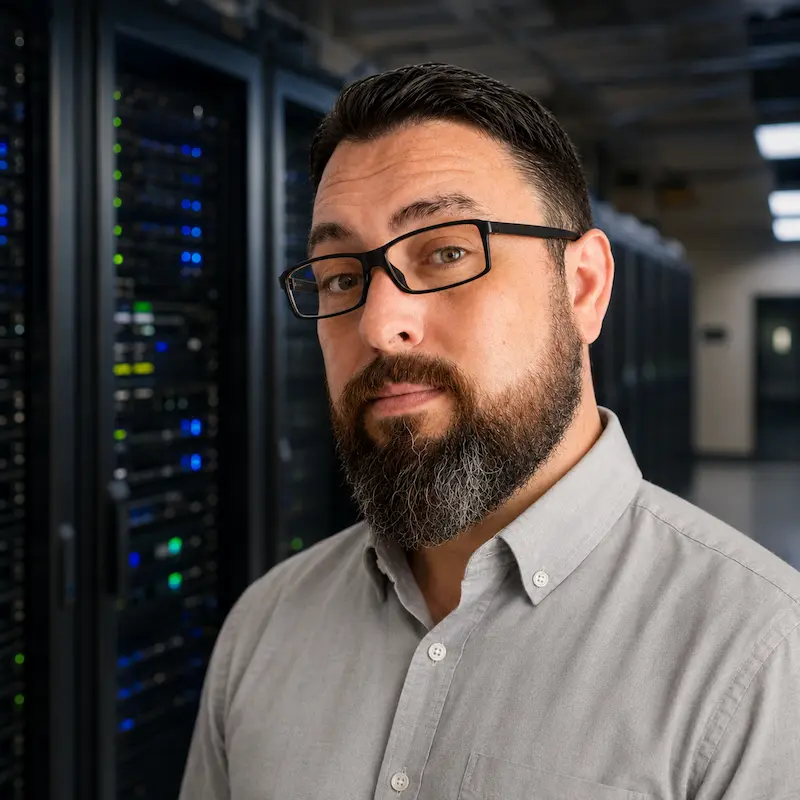
Book straight onto Chris's calendar. No sales rep and nothing to prepare: you talk with the engineer who would actually scope the work.