Scope, quote, and projected return before you build. Know the scope, the quote, and the projected return before you commit to a build.
The Automation Roadmap is a fixed-fee, two-week engagement. Senior engineers watch how your work actually happens, usually starting with a day or two on site, and hand you a written plan you can act on, with us or without us.
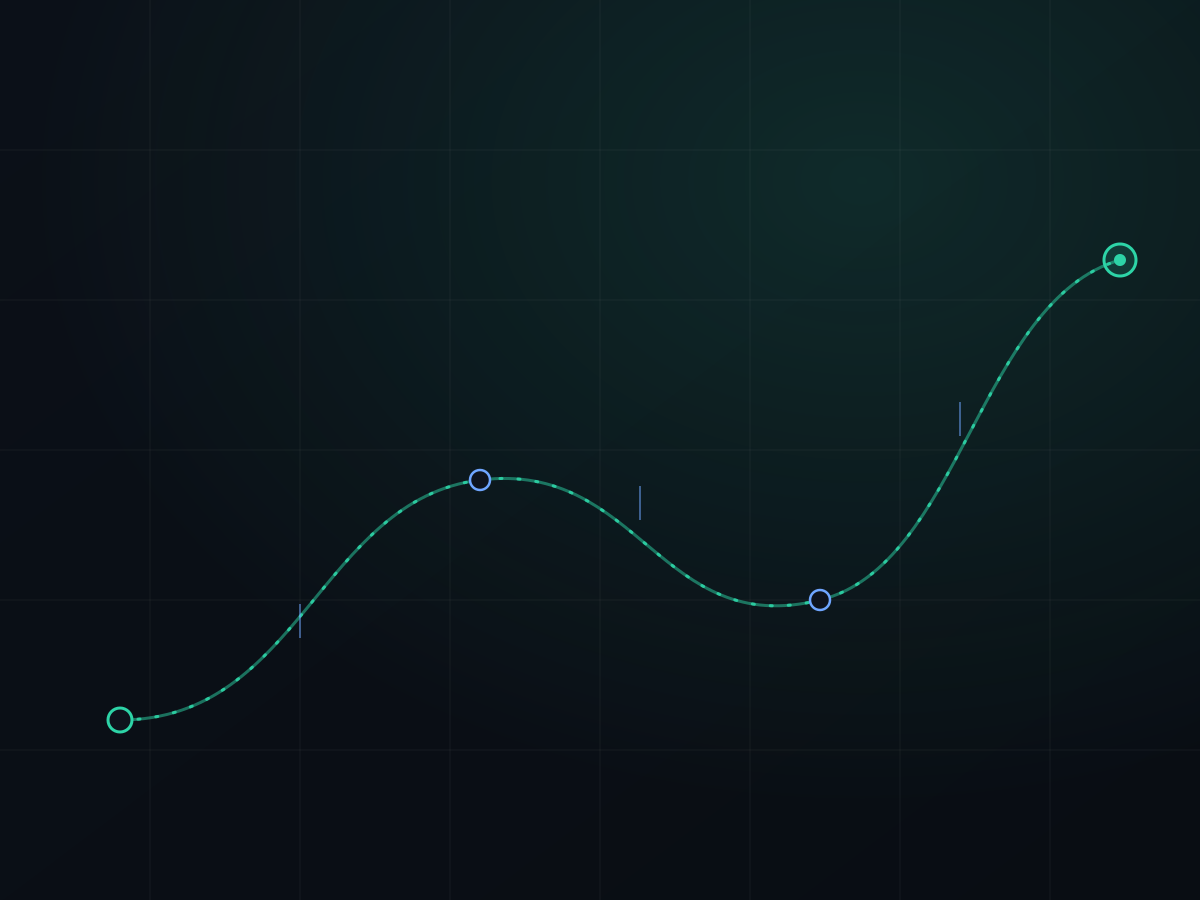
The Automation Roadmap: two weeks of engineering, one written plan.
No junior offshored to a discovery template. The same senior engineers who'll build the thing do the diagnostic themselves, so the plan reflects what's actually buildable.
- 01
Observe
USUALLY ON-SITE · DAY OR TWOWe spend a day or two where the work happens, usually on your floor, watching the process end to end and interviewing the people who run it. Not the version in the org chart, the version that actually gets the invoices out the door.
This is where the real bottlenecks surface: the report someone rebuilds every Friday, the copy-paste between two systems that never talk, the approval that sits in an inbox for a day.
WHAT YOU WALK AWAY WITH- A map of your workflows and where the hours leak
- The constraints that matter: systems, compliance, and how your team really works
- 02
Map & Rank
TARGETS & RETURNSWe turn what we saw into a ranked list of automation targets, each with a projected time and dollar return so you can tell the difference between a headline and a rounding error. High-value, low-risk work goes to the top.
Every target is checked against your existing systems and compliance requirements, so the plan is something you can build, not a wish list.
WHAT YOU WALK AWAY WITH- The top automation targets with projected time and dollar returns
- An integration plan that fits your existing systems and compliance
- 03
The Written Plan
FIXED QUOTE · TIMELINETwo weeks in, you have a written Roadmap: the workflow map, the ranked targets and their projected returns, the integration plan, and a fixed quote and timeline for the build. It reads like a plan you can act on, not a pitch deck.
You can build it with us, hand it to your own team, or take it to another vendor. If you build with us, the Roadmap fee is credited against the build. Ask to see a redacted sample Roadmap on the intro call.
WHAT YOU WALK AWAY WITH- A written plan you can act on with us or without us
- A fixed quote and timeline for the build
- The Roadmap fee credited against the build if you go ahead
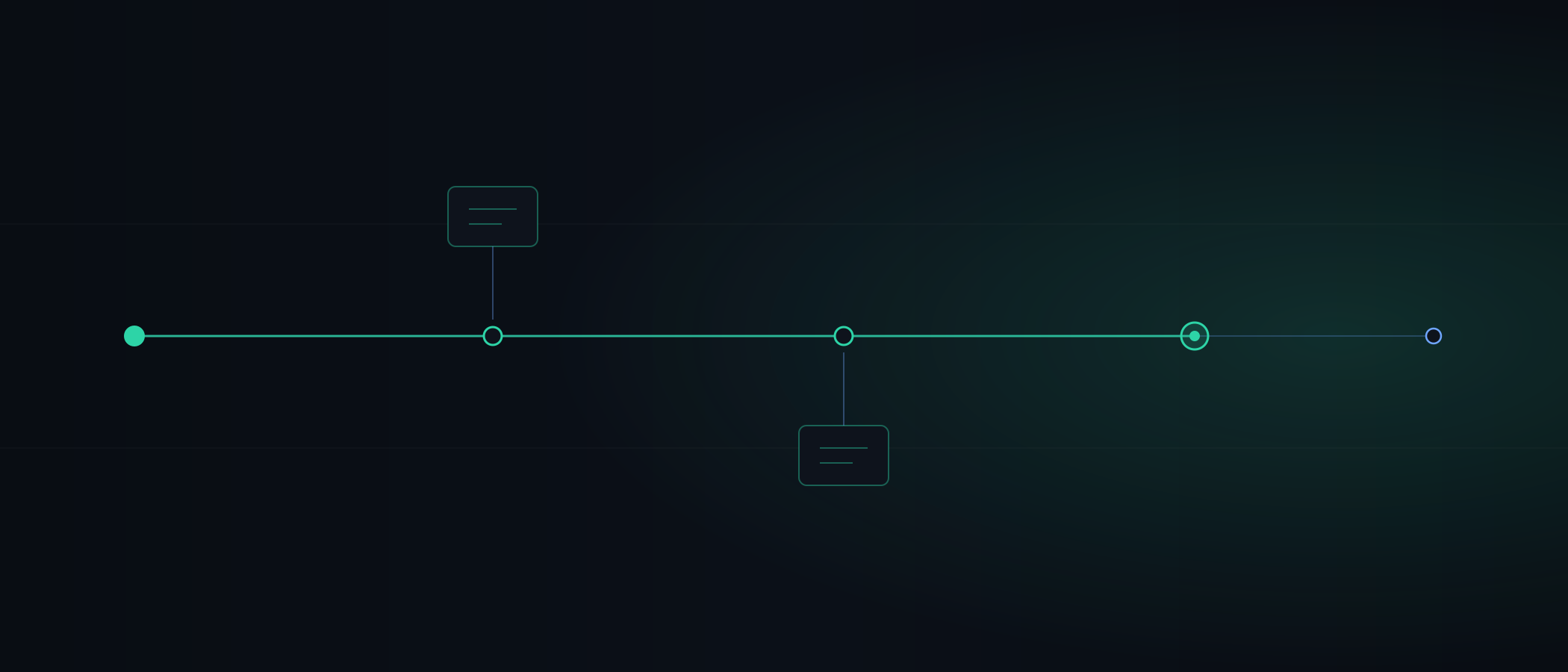
A deliverable, not a sales document.
- It's a plan you own, not a pitch.
The Roadmap is written to be useful on its own. You can act on it with us, with your own team, or with another vendor. It isn't a wrapper around a contract.
- Senior engineers do the discovery.
The people who'd build the automation run the diagnostic themselves. No junior handoff, no template, so the plan reflects what's actually buildable in your systems.
- The fee is credited against the build.
Pay for the Roadmap, and if you build with us the fee comes off the build price. You're not paying twice to get started.
- We'll tell you when to stop.
If the numbers don't justify a build, the plan says so and we stop. Charging for the Roadmap is what lets us be that honest.
What people ask before booking.
What does the Roadmap cost?
A single fixed fee, quoted on the free intro call once we've heard the scope, and fixed before we start. We don't publish a number because the right one depends on how much of your operation we're mapping. If you go on to build with us, the fee is credited against the build.
Why not just do this for free?
A free proposal is a sales document: it exists to win the next contract, so it tells you what you want to hear. The Roadmap is a paid deliverable, which means senior engineers spend real days inside your operation and hand you a written plan you own. Charging for it is what lets us tell you the truth, including when the truth is inconvenient for us.
What if the numbers say don't automate?
Then we tell you, in writing, and we stop. We would rather lose a build than sell you automation that won't pay for itself. That is the point of paying for an honest diagnostic instead of accepting a free pitch.
Do I have to build with AmiFi afterwards?
No. The plan is written to stand on its own: a workflow map, ranked targets, an integration plan, and a fixed quote and timeline. You can hand it to your own team or another vendor. If you do build with us, the Roadmap fee comes off the build price.
How much of my team's time does it take?
A day or two of observation and a handful of short interviews with the people who actually do the work, scheduled around your operation. After that we work from what we've gathered. You're not staffing a project for two weeks.
Is the Roadmap done on-site?
Usually, and usually at the start: watching the work happen in the room beats any description of it, and we're local, so a day or two on your floor is a drive rather than a travel line item. It isn't a rule. Where a workflow lives entirely in software, a screen share tells us more than a visit, and we'd rather say so than bill you for the trip. We agree on what the observation looks like before the engagement starts, and we come out later in the build whenever the work calls for it.
What happens after the two weeks?
You get the written Roadmap and a fixed quote for the build. You decide, on your timeline, whether to build with us, build with someone else, or sit on it. There's no retainer to cancel and nothing auto-renews.
Talk to an expert.
The Roadmap starts here. Thirty minutes over Google Meet, no travel, no prep: tell us where the time goes and we'll quote the fixed fee before you commit to anything.
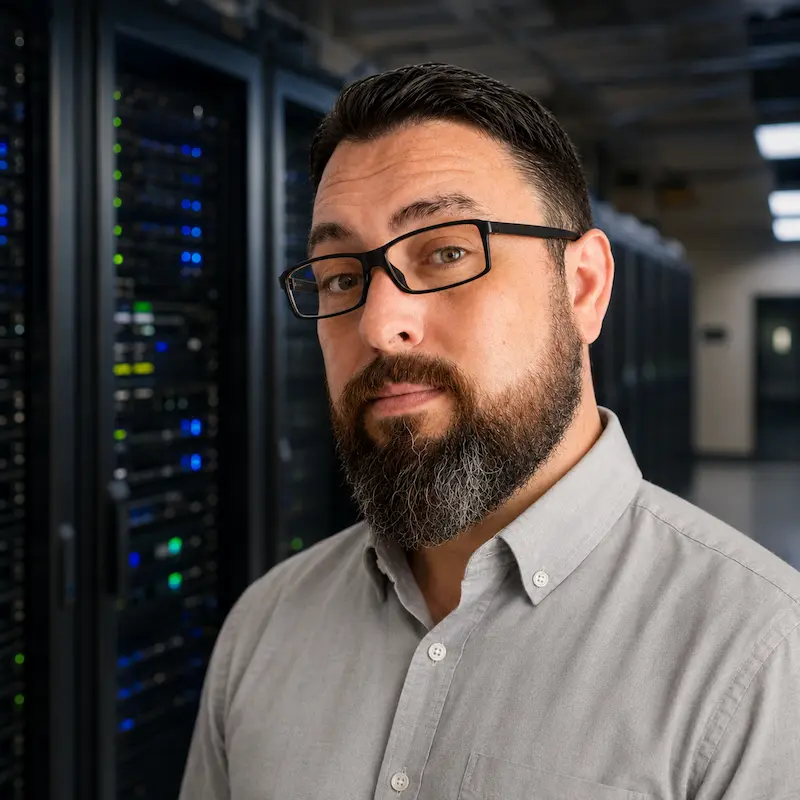
Book straight onto Chris's calendar. No sales rep and nothing to prepare: you talk with the engineer who would actually scope the work.
- Where your team's hours actually go.
- What's worth automating, and what isn't.
- A concrete next step, or an honest no.