The numbers never quite match.
The CRM says one revenue figure, accounting says another, and the meeting stalls arguing over which report is right instead of what to do.
When the CRM and the accounting package disagree, when month-end takes three days of exporting and pasting, the problem isn't the dashboard. It's underneath it. We build the syncs and the single source of truth so the report is one click and the number is one you can trust.
The CRM says one revenue figure, accounting says another, and the meeting stalls arguing over which report is right instead of what to do.
Someone exports from four systems, reconciles by hand in a workbook, and rebuilds the same close every single month.
The same record lives in three systems, entered three times, and over weeks the copies quietly stop agreeing.
You paid for the BI tool. The owners don't look at it, because the last time the number was wrong and now they don't trust it.
By the time the report is built it describes last week. Decisions get made on numbers that have already moved.
You want to put a model on top, but the records are scattered and contradictory, so anything you build would be guessing on sand.
Reporting people trust isn't a prettier chart. It's a data layer where every fact has one home, the systems stay in sync, and the report builds itself. We work from the bottom up.
We trace the same figures across your systems and find exactly where and why they stop agreeing: the field keyed two ways, the timing difference, the record that exists in one place and not the other.
Then we decide, with you, which system owns each fact. That decision is the whole game. Once every number has one authoritative home, 'which report is right' stops being a question.
We connect the ERP, CRM, and accounting so a record entered once propagates everywhere instead of being typed three times and drifting. The pipelines run on a schedule, handle errors instead of silently dropping rows, and keep the copies in step.
The people who were the human integration, exporting and pasting between systems, get that time back for good.
On top of the reconciled data, we build the reports and dashboards owners actually read: the month-end close that used to take three days generated on demand, the metrics that matter surfaced instead of buried.
If your BI tool is the right home for it, we feed that rather than sell you another. The point is a number you trust, not more software to log into.
Clean, connected, reconciled data is exactly what any AI project needs and rarely has. With the foundation in place, the interesting work (a model reading your records to classify, draft, or flag) sits on solid ground instead of guessing on a mess. And the whole layer is yours.
A dashboard on bad data is a faster wrong answer. We build the reconciliation and syncs underneath so the number is trustworthy before anyone graphs it, and we'll feed your existing BI tool rather than upsell another.
PCI-DSS implemented, reconciliation shipped inside a Fortune 500 healthcare company, financial systems wired to banks. Numbers that have to survive an audit are familiar ground.
A defined build is a fixed quote you approve before we start, and changes are quoted, never billed into a growing invoice. When a flat rate doesn't make sense, we work hourly against a cap you approve and move to a fixed quote once the scope is known. What you never get is open-ended billing.
Every engineer is a US citizen working in the US. Your data stays in your systems, nothing leaves the country, nothing trains on it, and you own the whole pipeline.
Almost always because the same fact is entered in more than one place and the places drift apart. Sales closes a deal in the CRM, finance books it in accounting, and a date, an amount, or a status gets keyed slightly differently in each. Without a sync and an agreed source of truth, both are 'right' and neither matches. We find where the numbers diverge, decide which system owns each fact, and wire the rest to follow it.
For a defined build it's a fixed quote, given after the free intro call and locked before we start. We don't publish a number because syncing two systems and building a full month-end reporting layer are different sizes of job. You approve the scope and the price up front, and changes are quoted rather than billed silently. Ongoing support runs as a retainer sized to your operation. When a flat rate doesn't make sense, say an undocumented source no one has mapped yet, we work hourly against a cap you approve and move to a fixed quote once it's scoped. What you never get is open-ended billing running in the background.
A BI tool draws the charts. It doesn't fix the reason the underlying numbers disagree. Point a dashboard at messy, unreconciled data and you get a very polished wrong answer, faster. The work that makes a dashboard trustworthy happens underneath it: the syncs, the reconciliation, the single source of truth. We build that layer, and if your existing BI tool is the right place to display it, we'll feed it rather than sell you another one.
Because the data is where AI projects quietly fail. A model is only as good as what it reads, and if your records are scattered, duplicated, and contradictory, the model inherits every one of those problems and adds confidence to them. Clean, connected, reconciled data is the unglamorous foundation the interesting AI work sits on. We'd rather build that foundation right than sell you a model that's guessing on top of a mess.
In your systems and your accounts, not ours. We build to your compliance requirements and put it in writing: your data stays where it is, nothing leaves the country, and nothing we build trains on it. Every engineer is a US citizen working in the US. We've handled reconciliation and reporting under real audit scrutiny before, including PCI-DSS and inside a Fortune 500 healthcare company.
Thirty minutes over Google Meet, no prep. Describe where your systems disagree or how long month-end takes, and we'll tell you where the data layer is breaking and what a single source of truth would take.
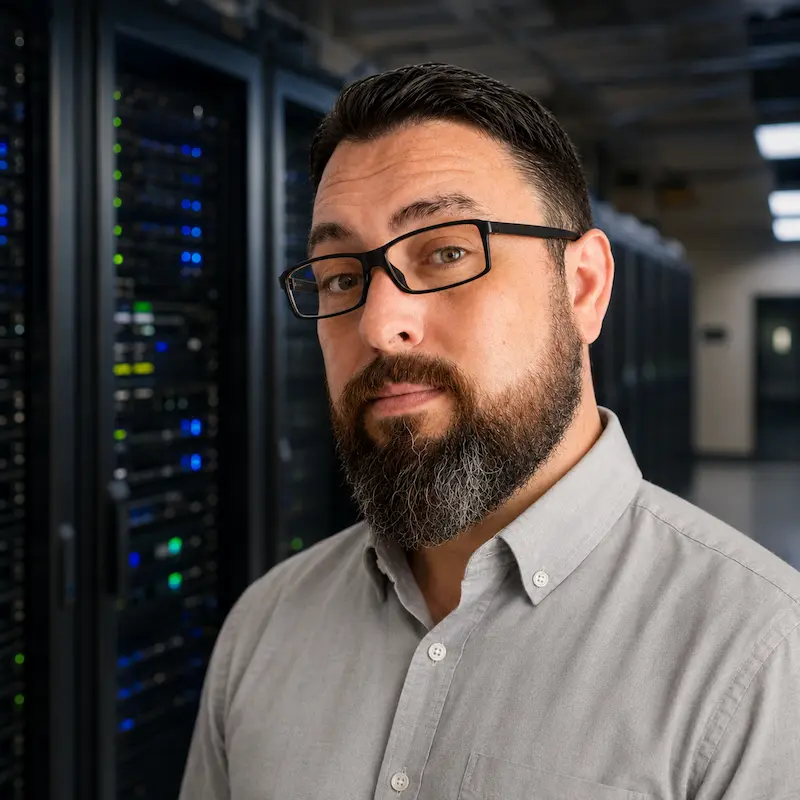
Book straight onto Chris's calendar. No sales rep and nothing to prepare: you talk with the engineer who would actually scope the work.