Forty steps nobody dares edit.
What started as a three-step Zap has grown into a sprawl only one person understands, and everyone is afraid to touch it.
For simple triggers between two apps, the no-code tools are cheaper than anything we would build, and we will tell you to start there. The trouble arrives later: branching logic they can't express, volume pricing that climbs, and runs that fail quietly with no one watching. This is where that line falls, and what to do when you cross it.
What started as a three-step Zap has grown into a sprawl only one person understands, and everyone is afraid to touch it.
A run drops records when volume spikes and no one notices until the numbers are wrong. There is no real error handling, just hope.
Your process branches: this customer, that exception, unless it's a weekend. No-code tools bend to a point, then fight you.
Per-task pricing was cheap at low volume. At your volume it now rivals the cost of building the thing properly.
The integration you need is close but not quite: a field it can't map, an auth flow it doesn't support, a system with no off-the-shelf block at all.
A retry fires twice, a record posts twice, and cleaning up the double-entries eats the time the automation was supposed to save.
No-code platforms and engineered automation are not rivals: most operations should run both. The skill is knowing which parts belong on which, so you never overpay for a build you didn't need, or lean on a Zap that was never built to carry the load.
For a handful of triggers between two apps that both have clean connectors, low volume, and no branching, the no-code tools are the right answer and nothing we build would be cheaper. Notify a channel when a form comes in, copy a row to a sheet, add a contact to a list: that is exactly what they are for.
If that is your whole problem, we will point you at Zapier or Make and leave it there. Paying an engineering firm to rebuild a five-step Zap is money lit on fire, and we will say so.
When the logic branches, the volume makes per-task pricing hurt, or a flow fails quietly and no one catches it, you have crossed the line. Engineered automation gives you the branching, the error handling that alerts instead of dropping records, and connections to systems that have no off-the-shelf block, all running for a predictable cost.
You don't rip anything out. We keep the Zaps that work, replace the ones that don't, and turn the connectors that almost-fit into ones that actually do. The result is one automation you can trust at your real volume, not a pile of them you're afraid to open.
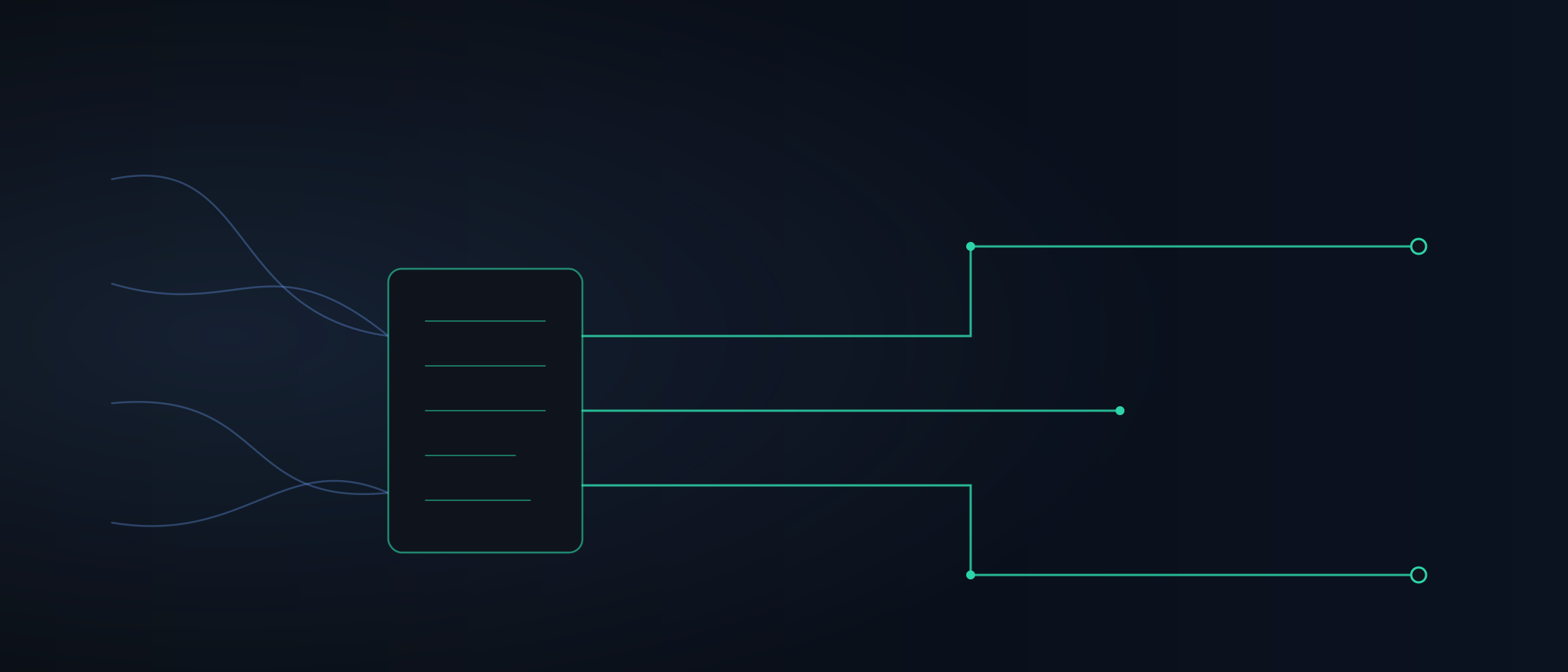
A linear flow of a few steps is no-code territory. Once it branches on conditions and exceptions, it wants real code that can express them without a workaround stack.
If a silent failure would cost you, missed records or a broken month-end close, you need error handling and alerting that no-code tools don't give you. If a miss is harmless, leave it be.
Per-task pricing is a bargain at low volume and a tax at high volume. When the monthly bill approaches what a build would cost to run, the tool has outgrown its job.
If an off-the-shelf block does what you need, use it. If you are chaining three workarounds because the connector almost fits, that is the system telling you it's time to engineer it.
Graduating isn't ripping everything out. The right answer is usually a mix: no-code where it's genuinely enough, engineered automation where the load and the logic demand it.
Almost always, yes, and we will tell you when to. For simple triggers between apps with clean connectors, the no-code tools are cheaper than anything we would build, and starting there costs you nothing to learn what you actually need. Come back when you hit branching logic, volume pricing, or flows that fail quietly: that is the line where a build earns its cost.
No, and you usually shouldn't. The goal is to keep what works and engineer only the parts that break. We map what you have, leave the flows that are genuinely fine on Zapier or Make, and rebuild only the ones that branch, fail silently, or cost too much at your volume. Most operations end up running both, on purpose.
A few clear signals: a Zap that has grown into dozens of steps nobody wants to edit, runs that drop records when volume spikes, a monthly bill that rivals a proper build, or a connector you are holding together with three workarounds. One of those is a maybe. Two or three is your answer.
Branching logic without a workaround stack, error handling that alerts you instead of silently dropping data, connections to systems that have no off-the-shelf block, and a predictable running cost instead of per-task pricing that climbs with your volume. It is the difference between an automation you hope is running and one you can trust at month-end.
Thirty minutes over Google Meet, no prep. Walk us through what your no-code tools are doing today and where they're straining, and we'll tell you what to leave alone, what to engineer, and what we'd tackle first.

Book straight onto Chris's calendar. No sales rep and nothing to prepare: you talk with the engineer who would actually scope the work.